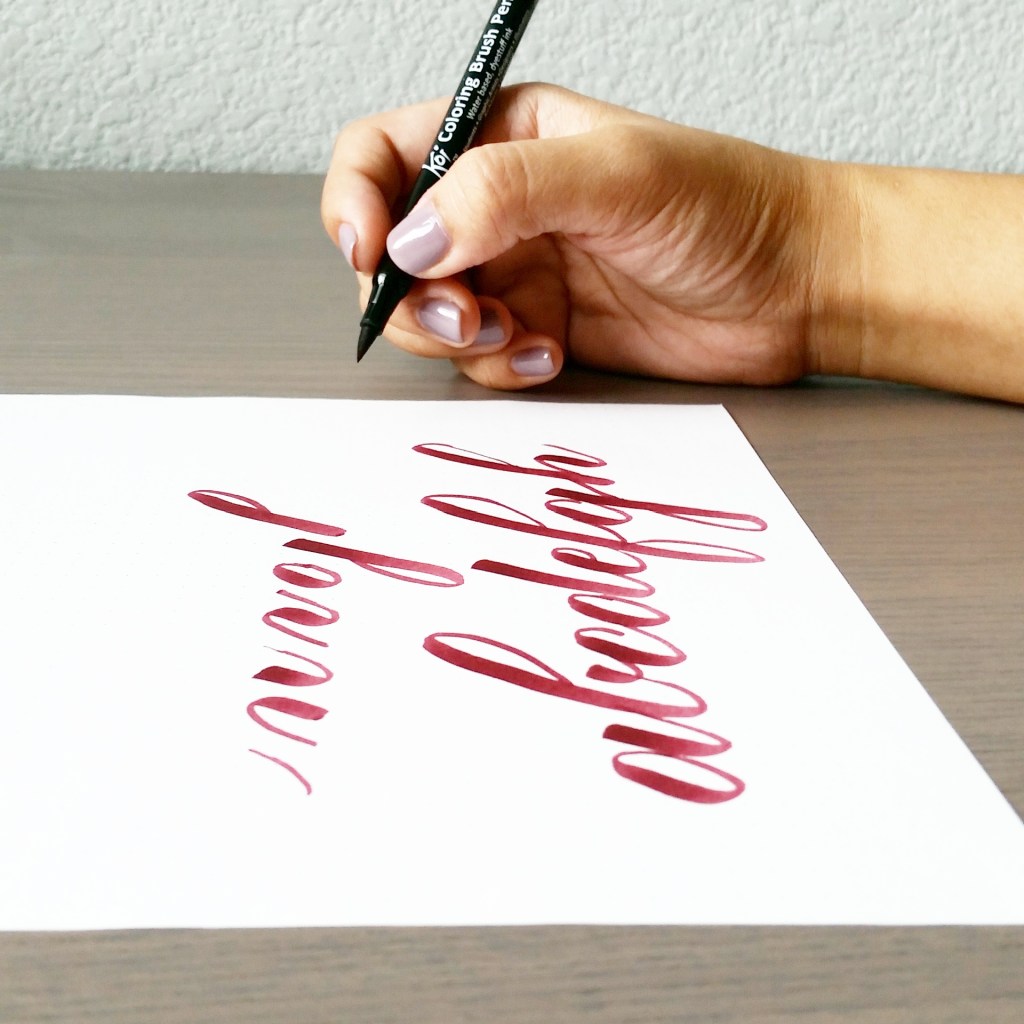
For the past eight weeks, we’ve reviewed and practiced the basic strokes every brush calligrapher should know. Once you master the basic strokes, you are ready to form letters. Read on to learn about three key aspects to connecting basic strokes when forming letters.
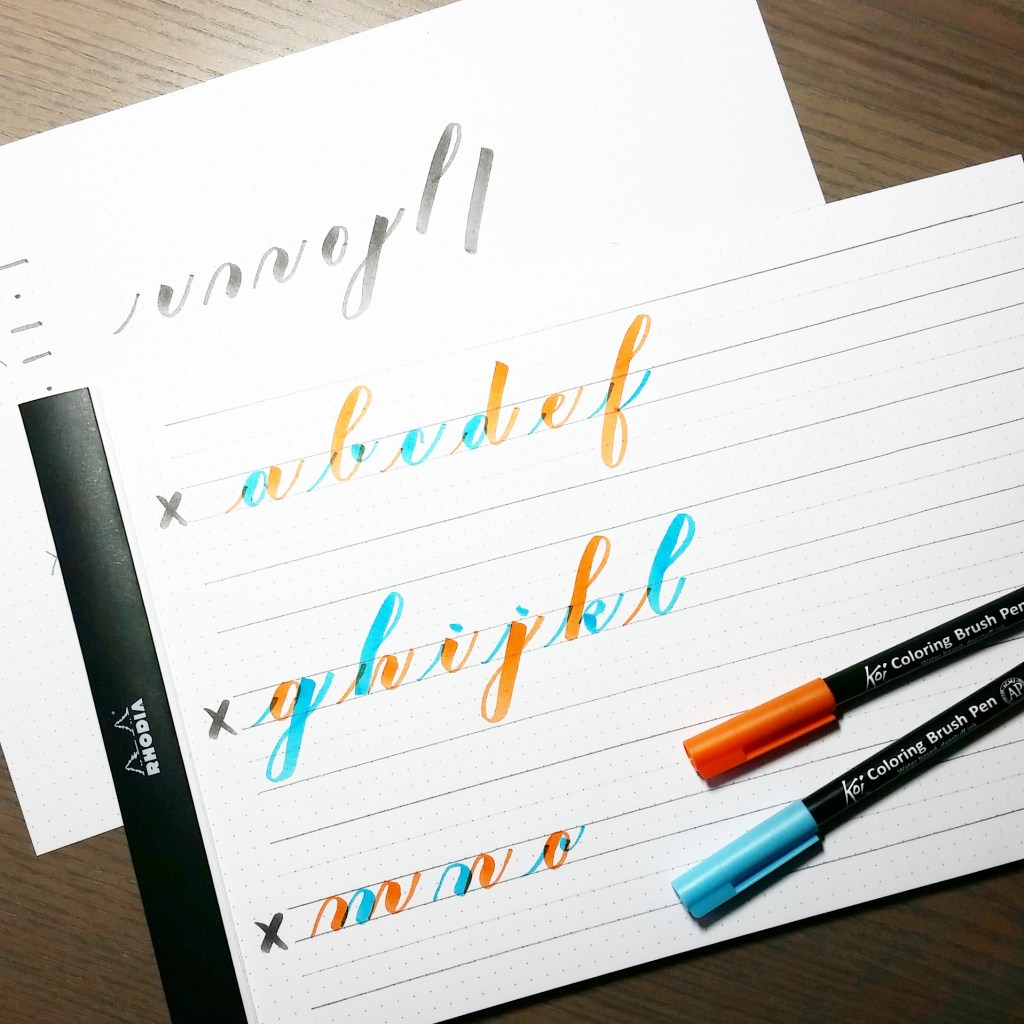
3 tips for connecting basic strokes to form letters
1. Learn the basic strokes
You must take the time to learn, understand, and practice the basic strokes before you start creating letters. It is tempting to jump into brush calligraphy and start writing whatever your heart desires. But you’ll be very pleased and grateful if you set yourself up for success by building your brush calligraphy foundation and increasing your muscle memory.
Take your time. Go slow. Be intentional and deliberate with your practice so that you can be best prepared to begin writing letters.
Go through each and everyone of the basic strokes. Pay close attention to the proper form, tips that I share for each one, and the types of drills that help you practice the strokes.
2. Lift
One of the key differences between calligraphy and cursive is that you need to lift your brush pen. With cursive, you rarely lift your pen. In fact, you pretty much lift your pen only to cross your T or dot your I. On the other hand, you lift your pen after nearly every single stroke when it comes to calligraphy.
Lifting your pen allows your strokes to breathe. When your strokes can breathe, your script looks very elegant and deliberate. It doesn’t look rushed, messy, or sloppy.
When you life your pen, you can easily place subsequent strokes in a location on the page that creates an elegant look to the letters when they are viewed as a whole. Due to the nature of the brush calligraphy strokes (thin upstrokes and thick downstrokes), it is important to position each stroke in such a way that allows them to “breathe” or be spaced apart enough that they look intentional and fluid.
When you are first practicing the lifting of your brush pen, try connecting only two strokes at a time. Try these combinations:
- Entrance stroke + underturn stroke
- Entrance stroke + descending stem loop
- Overturn stroke + compound curve
- Underturn stroke + oval
3. Look ahead
As you write each basic stroke to form letters, you need to look ahead. Looking aheads means that you are literally looking to the next space on your page and envisioning what the following stroke will look like. How much space will it take up? What shape does it take? How do you need to hold and position your pen in order to place the next stroke properly and elegantly next to the stroke you just made?
Part of looking ahead is lifting. When you lift your pen, you sort of pause, taking a moment to glance ahead of the stroke you just created and see what the next stroke would look like.
If you lift your pen, you are better able to look ahead and create the next stroke intentionally and carefully. The skill of looking ahead and anticipating your next stroke will come with time and practice. Remember, start with connecting two basic strokes at a time (see #2). Then slowly add more and more basic strokes until you can more easily put them together to create all the letters of the alphabet.
Video: Connecting basic strokes to create letters
Watch the following video to see me demonstrate these tips. You’ll find that the a solid foundation of the basic strokes will truly set you up for success when writing letters.
Practicing the Alphabet
Be sure to practice your letters one at a time. This doesn’t mean that you cannot write more than once at a time – it just gives you a very deliberate practice plan so that you can find more success than if you were to rush and try to write all of the letters in one sitting.
I have found that my most successful practice sessions come when I break down my words and letters, and really “see” these letters as simply basic strokes that are simply connected to each other.
On Instagram, you can find a daily alphabet challenge called #handletteredABCs. The challenge is in its the second round as the first round took place in the summer of 2015. As of this blog post, the challenge is currently at the letter “O.” But you can easily catch up by starting at the very beginning, or jumping in with the letter of the day. You can find more details at @handletteredABCs. I’d love for you to join! You can find my own letters here: #piecesABCs.
~ ~ ~
It’s your turn! Tell me in a comment below:
What is your experience with connecting basic strokes?
What is your biggest struggle when it comes to connecting basic strokes?
Do you have any other tips to share when connecting basic strokes?
~ ~ ~
P.S. If you liked this post, please share it with a friend!
P. P. S. If you haven’t already done so, subscribe to my blog below so you get my posts directly in your inbox!
Follow me on Instagram: @piecescalligraphy
And now on Periscope! Find me at @piecescalligraphy


Leave a Comment