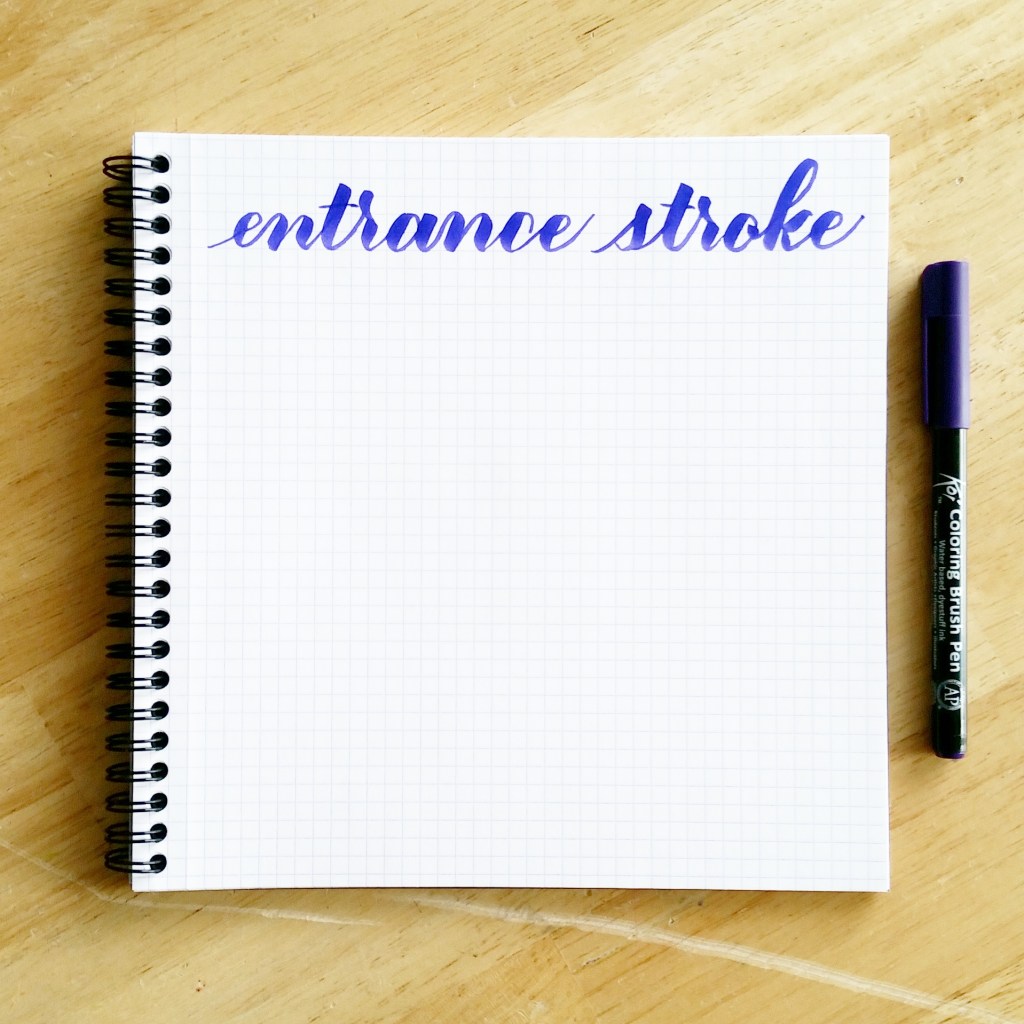
Basic strokes are the building blocks of your brush calligraphy foundation. Not flourishes, not design, not even letters.
It’s all about the basic strokes.
Over the next couple of weeks, I will be devoting one blog post (and video!) for each of the basic strokes you need to master as a brush calligrapher.
Let’s start with the entrance stroke.
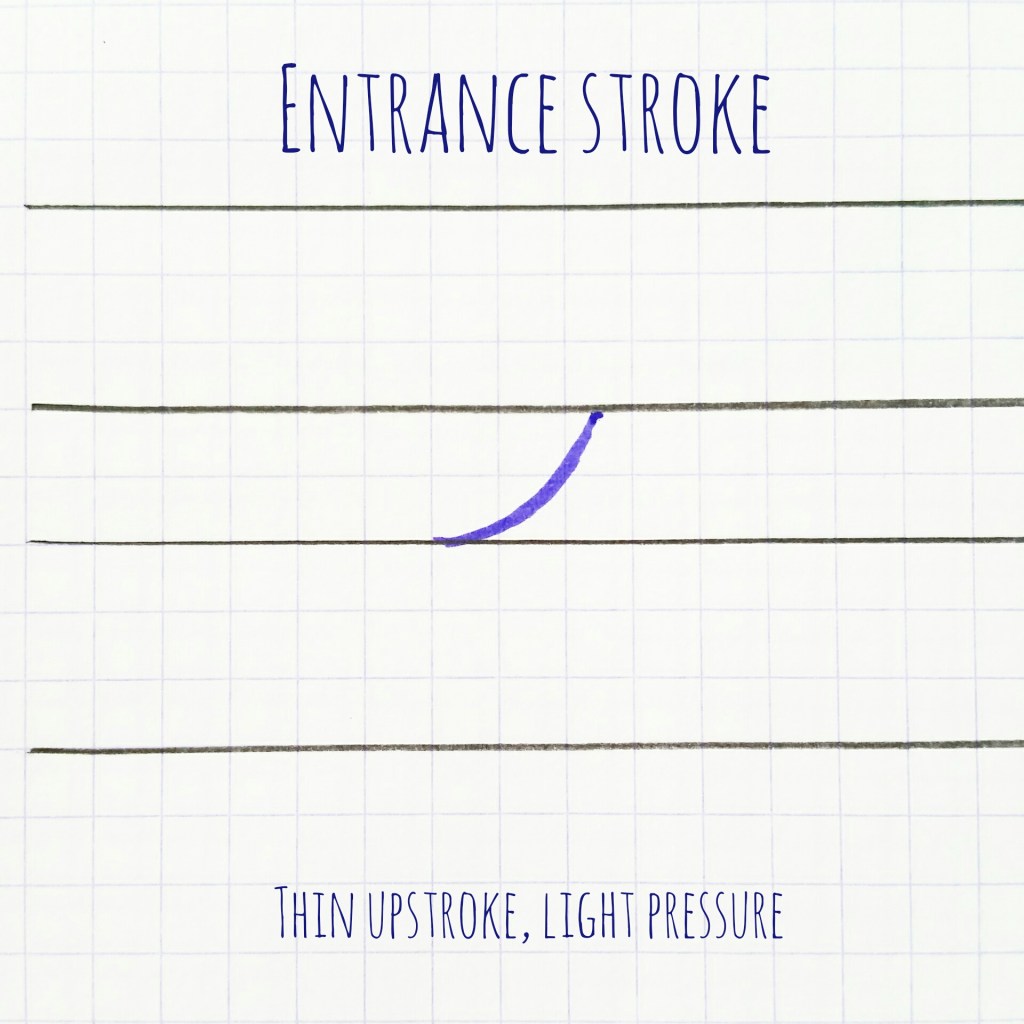
What is the entrance stroke?
The entrance stroke is a thin upstroke that begins, or enters, into a letter. It starts at the baseline and ends at the waistline.
How to create the entrance stroke
To create the entrance stroke, first be sure you are holding the pen properly and facing it in the right direction.
Start by placing the tip of your brush pen at the baseline. Then draw a thin upstroke with a slight curve as shown in the photo. End the stroke at the waistline.
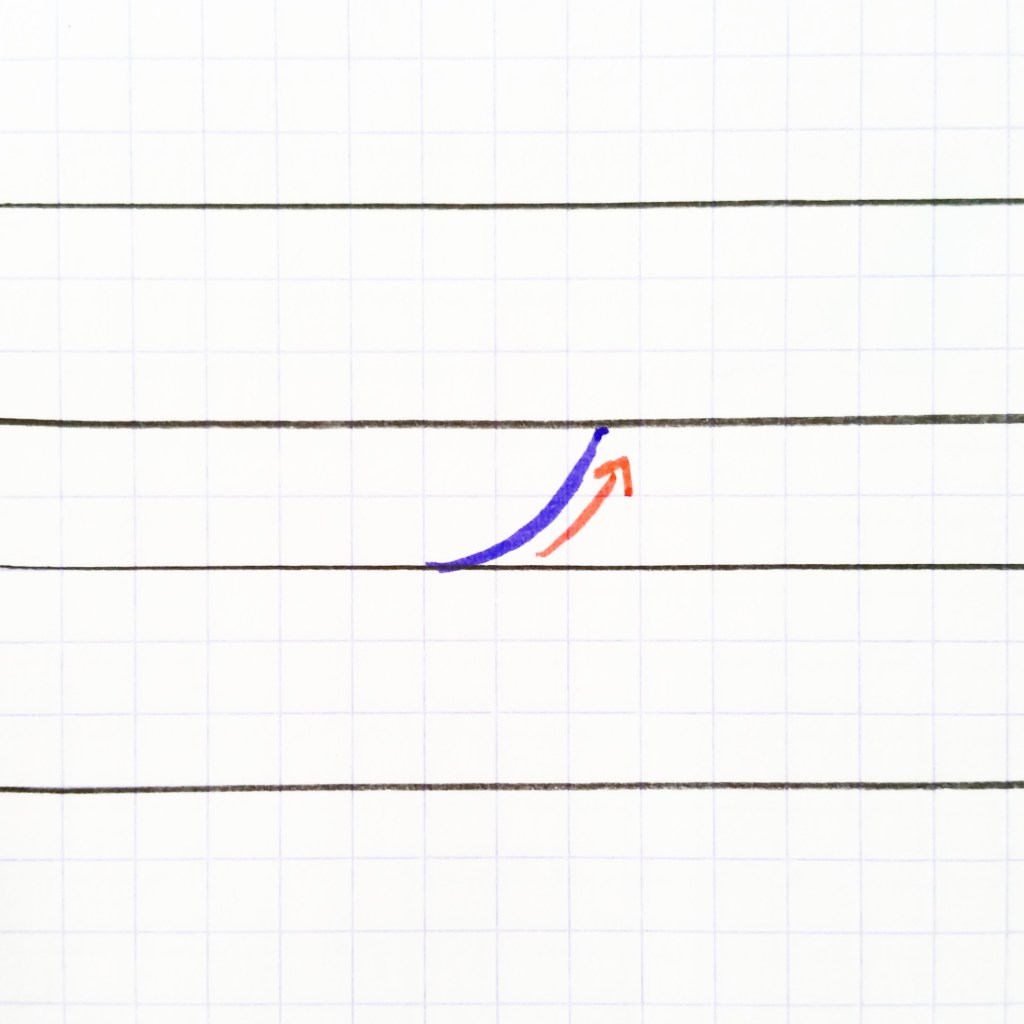
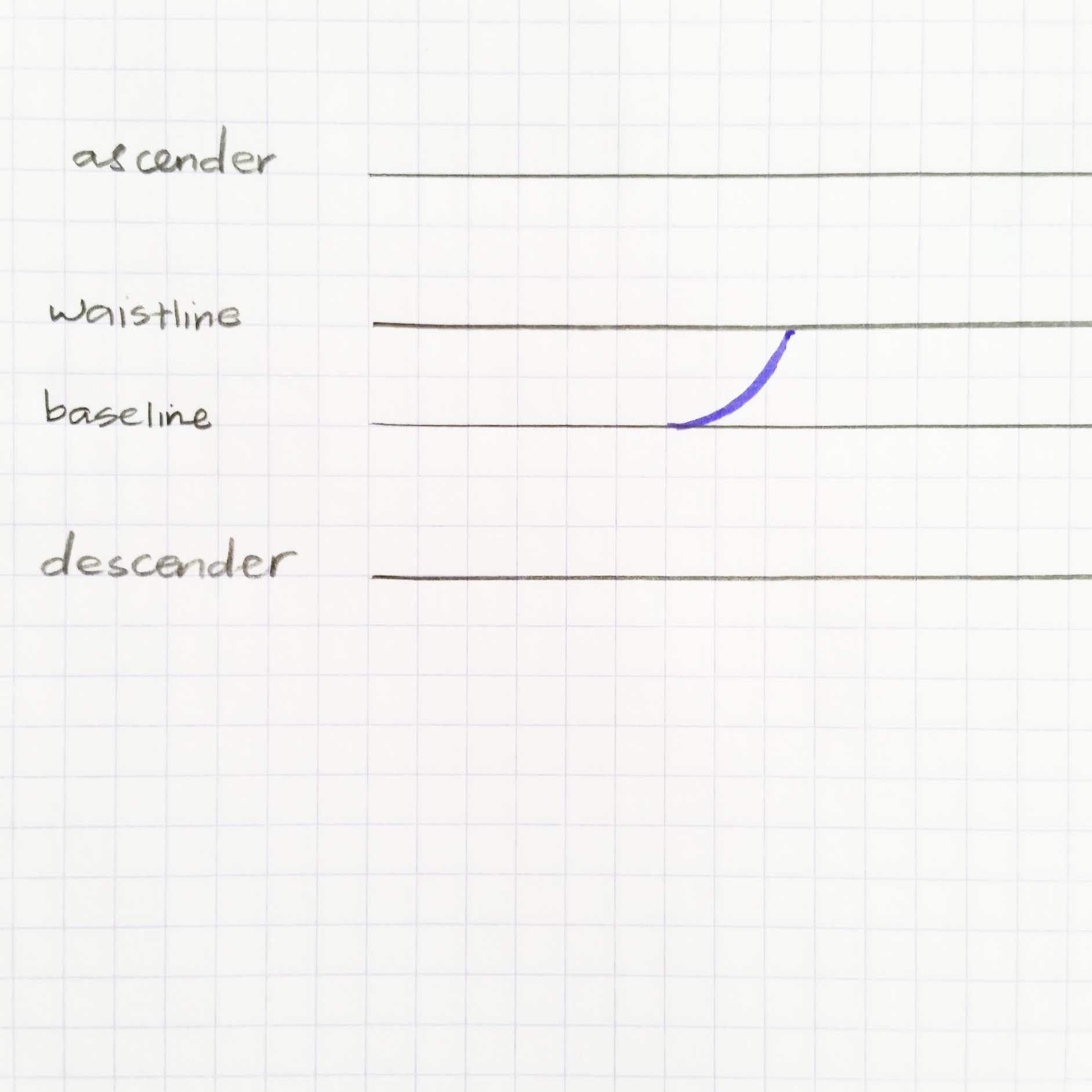
The entire stroke should maintain the same thinness and it should slightly curve to the right.
You may be shaky at first, or unfamiliar with how the stroke should feel as you create it. But as always, practice makes progress. I share practice drills at the end of this post for you to work on.
When to use the entrance stroke
Since the entrance stroke is the beginning of a letter, it’s no wonder the entrance stroke is used in the entire alphabet!
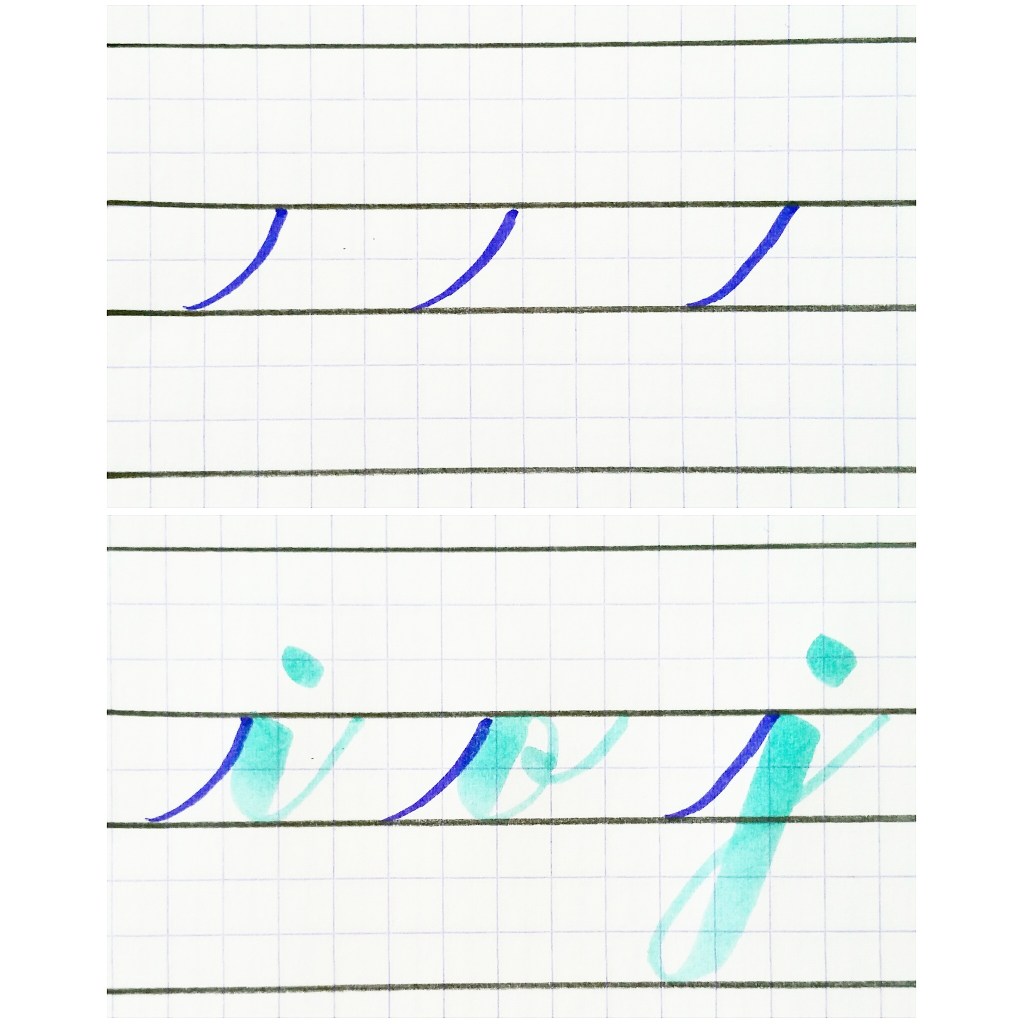
Specifically, the entrance stroke is used for every miniscule, or lowercase letter. It is also used in many connectors between letters. We’ll talk about connectors in future posts.
Here are examples of the entrance stroke being used in the letters i, o, and j:
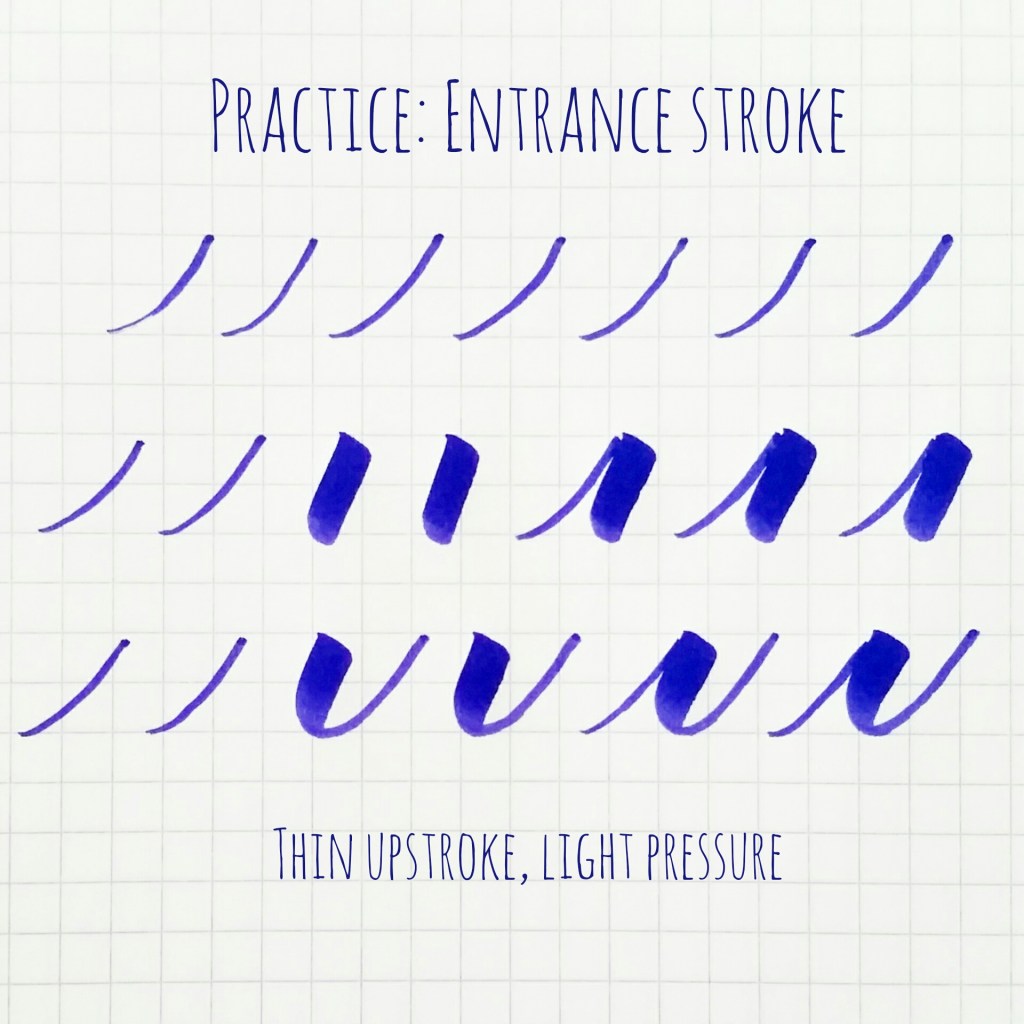
Practice Drills
Do these practice drills to improve your entrance stroke. Don’t worry about making it as thin as a hairline. The key is to create thin upstrokes that are dramatically smaller in width than your thick downstroke.
- Entrance stroke: Fill a page with entrance strokes. Focus on the position of your hand, your grip, your technique, and the forming of the stroke.
- Entrance stroke + full pressure stroke: Connect the entrance stroke to the full-pressure stroke. After creating the entrance stroke, lift your pen and slightly move it to the right of the top of the entrance stroke. Don’t worry about perfecting the full-pressure stroke. We will discuss the full-pressure stroke into more depth in a future post.
- Entrance stroke + underturn stroke: Connect the entrance stroke to the underturn stroke.
If you mess up, keep going. Focus on the next stroke. Remember that you will only improve when you keep on practicing and experimenting and learning.
Video: The Entrance Stroke
~ ~ ~
It’s your turn! Tell me in a comment below:
Have you tried the entrance stroke? How would you describe your experiences so far?
What is the hardest part about the entrance stroke for you?
Are you posting your work on Instagram? Be sure to share by tagging #pieces_basicstrokes!
~ ~ ~
P.S. If you liked this post, please share it with a friend!
P. P. S. If you haven’t already done so, subscribe to my blog below so you get my posts directly in your inbox!
Follow me on Instagram: @piecescalligraphy


Leave a Comment