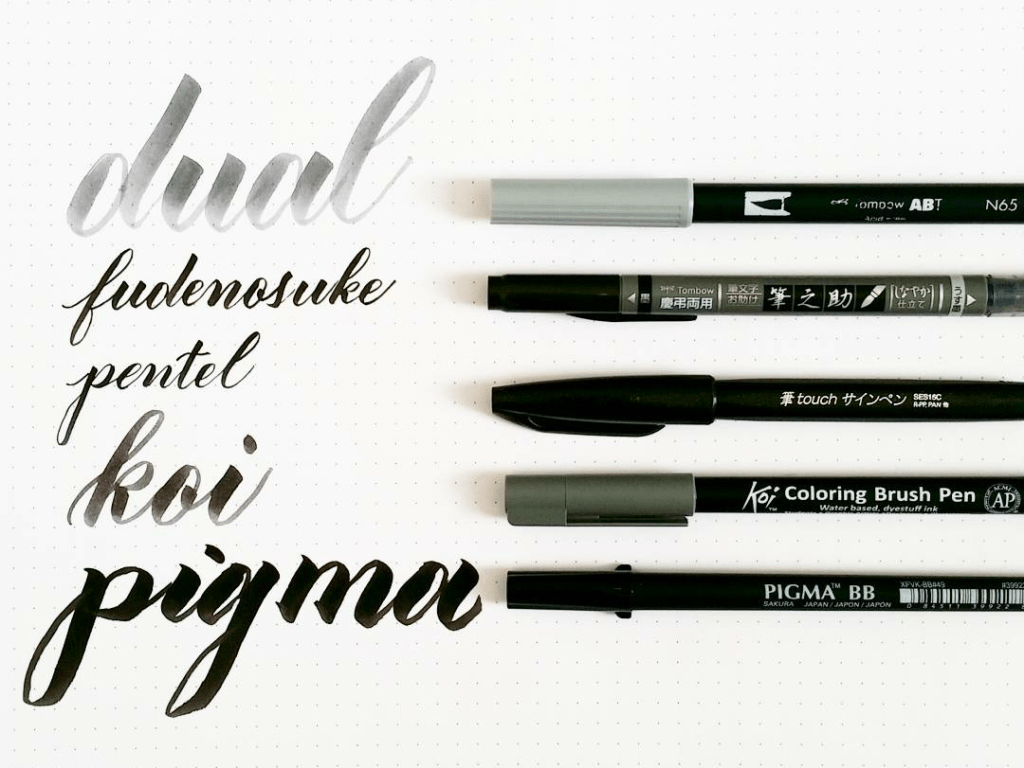
Having the right tools can make all the difference in your brush calligraphy journey. It’s important to find the brush pen or set of pens that you feel comfortable with, understand how to use, and enjoy.
You don’t need a hundred pens, or even ten. You just need one or two, maybe three, that are your “go-to” pens.
Preferably, your brush pens should be different in some way, such as tip size, flex, or color. This gives you options as you complete various projects. For example, you may use a smaller tip pen to write on a gift tag, but a larger, stiffer pen for a poster.
Take a look inside my toolbox to see the five brush pens I am currently using. I’ll describe each one, including pros and cons. Then you can watch my demonstration video where you will see each pen in action.
A review of five brush calligraphy pens
*This post contains affiliate links. I would greatly appreciate if you would use the links in this post to purchase your supplies. At no extra cost to you, I will receive a small commission that will help me continue to provide free brush calligraphy tutorials and videos!
- Tombow Dual Brush Pens: With a flexible brush tip on one end and a fine point on the other, this pen is perfect for calligraphy and illustration. I like to use the brush tip for brush calligraphy and the fine point for touching up, or for simple print. The pen itself is fairly large, so it takes some getting used to.
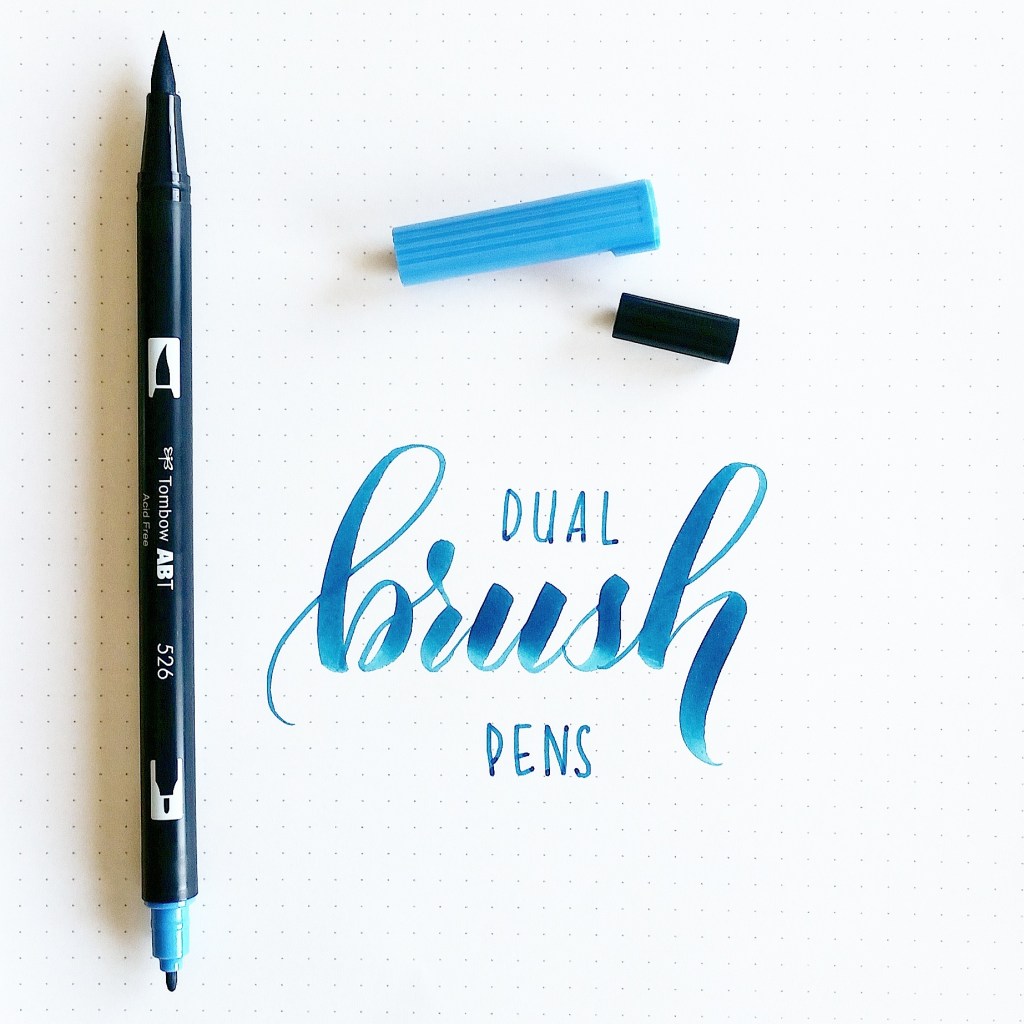
In action: Tombow dual brush pen The best part about the dual brushes… The color options are endless! The fun thing can be blended using a blending palette or by putting the ink of one pen onto the tip of another. And they are “self-cleaning,” meaning after you blend them, they will return to their original color as you continue to use them. There is a full set of 96 colors that is on my own wish list.
- Tombow Fudenosuke Brush Pens: These pens are perfect for the beginning brush calligrapher. They come in either a hard tip or soft tip, or both! The tip of these pens is much smaller than the dual brush, which make them ideal for writing in smaller sized calligraphy/lettering, or for writing longer pieces.
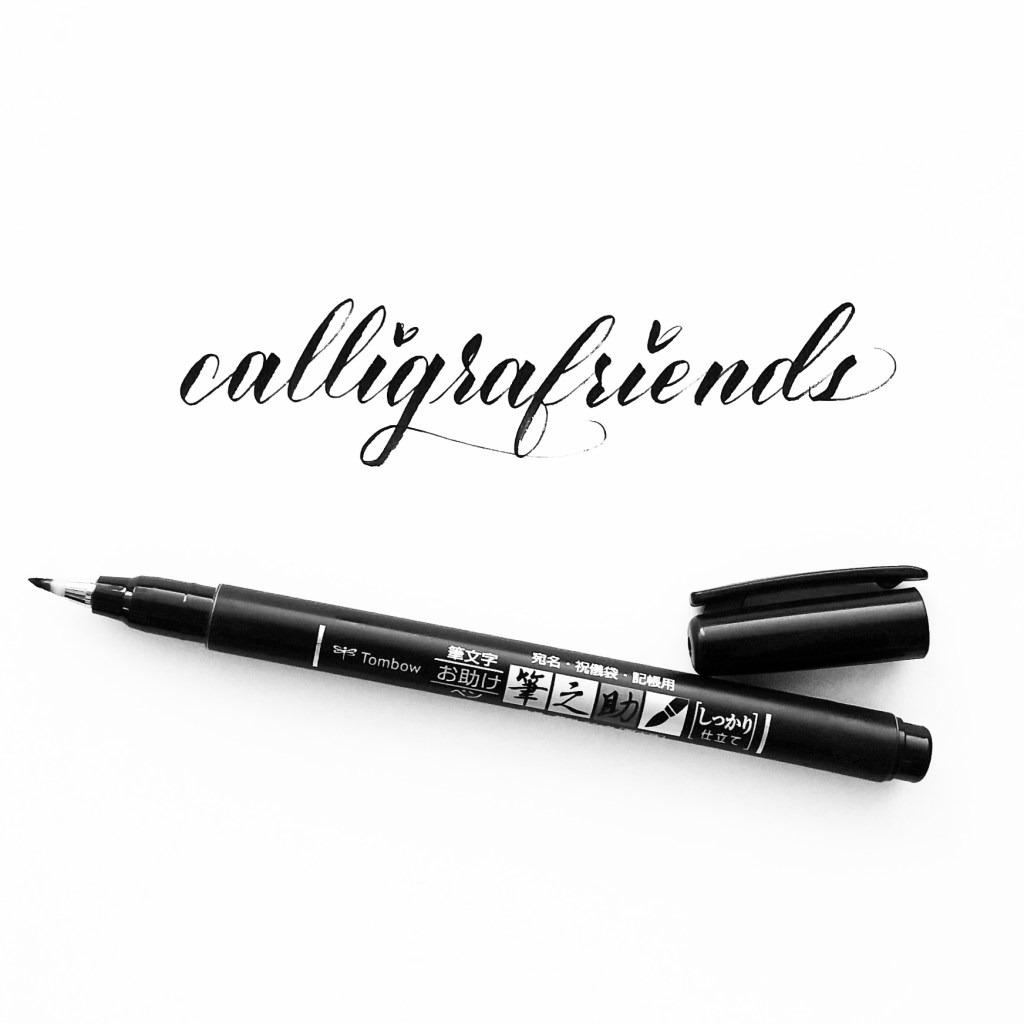
In action: Tombow Fudenosuke (soft tip) The hard and soft tips differ in the stiffness of the pen tip. The hard tip is more firm and seems to create thinner hairlines (upstrokes) than soft tip. While the flexibility of the soft tip can make it difficult to control the pen, I really like that the pen tip maintains a degree of firmness, that makes it a great beginner brush pen. If I had to share a downfall, it would be the lack of color options that they come in. Aside from the twin tip (one side is gray), these pens only come in black.
- Pentel Sign Pens (with brush tip): The Pentel sign pen is a wonderful brush pen for beginners. It is very similar to the Tombow Fudenosuke described previously. It has a small pen tip, is fairly flexible, and is very easy to control. It comes in 12 fun colors you can choose from, or you can be a collector (like me) and get the entire set of 12.
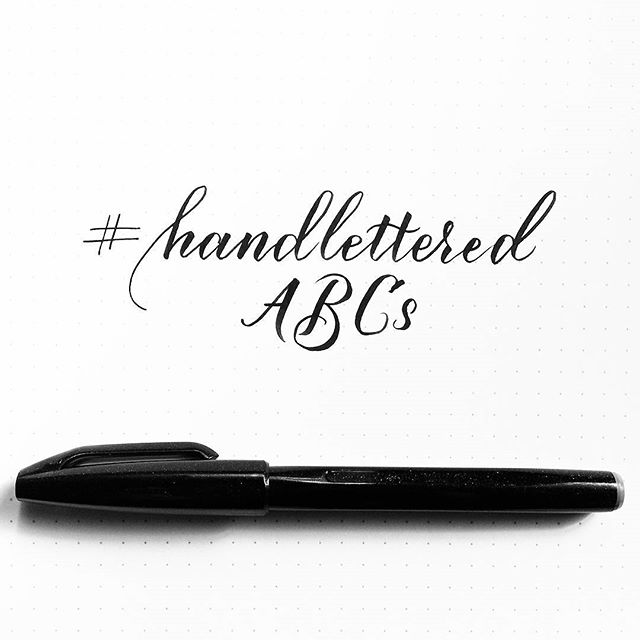
In action: Pentel sign pen (with brush tip) NOTE: Be sure to get the Pentel sign pen with a brush tip (also called the “fude touch”), do not get the Pentel fine point (not a brush pen).
- Sakura Koi Watercolor Brush Pens: The Koi coloring brush pens are similar to the Tombow dual brush pen in pen tip size, but are much smaller in terms of the pen itself (the outer shell). The smaller size makes the Koi an easier pen to handle, and less overwhelming than the larger size of the dual brush.
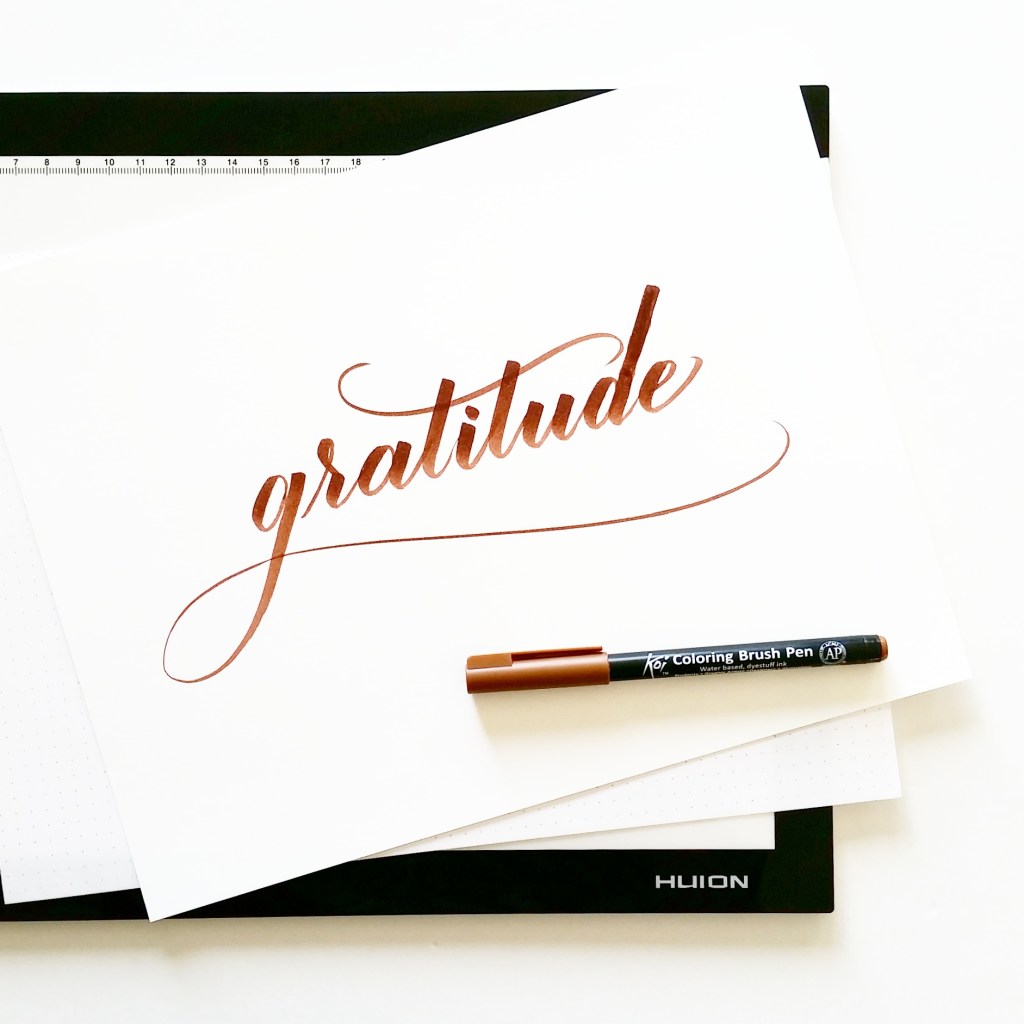
In action: Koi coloring brush In addition to the smaller pen size, what I love about the Koi brushes is the firmness of the tip. It achieves smooth strokes and is full of ink and color. The Koi brushes come in either a 12 pack or a 24 pack of colors, which makes for lots of blending and coloring fun!
- Sakura Pigma Professional Brush Pen: The Pigma brush pens are pretty new to me and I am already loving them! They come in a fine, medium, and bold tip, which allows for a good amount of options when choosing what size writing you want to create. The pens only come in black ink (darn!).
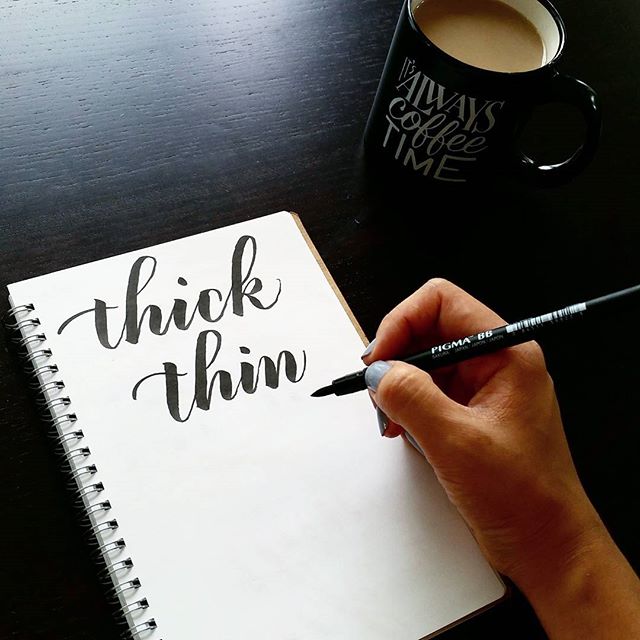
In action: Sakura pigma professional brush The interesting thing about the Pigma brushes is that they have a raw look to their strokes. This raw look is sometimes categorized as “frayed” or “furry,” at least in comparison to the pens described above. However, I am loving this look as it better resembles an actual paint brush with bristles, while still being a marker that you do not have to refill or dip into ink.
Choosing a Brush Pen
When choosing a brush pen, it is important to recognizes the differences in pens and your own personal preferences and needs. My best advice is to try as many different pens as you can. And try them more than once! You never know when you will begin to love a pen, or if there is just something better out there than what you currently use.
Some tips for choosing a brush pen:
- Learn how to hold the pen. You need to know how to properly hold the pen in order to test it completely and thoroughly.
- Practice some basic strokes with each pen to learn how it writes. Don’t just start writing. Rather, do a few basic strokes to test the waters, and then gradually increase to writing letters and words.
- Ask around. Aside from my comparison posts and videos, ask other brush calligraphers and handlettering artists to get their opinions and experiences with pens.
Video: Review of five brush calligraphy pens
Other Resources
Check out the following resources for more brush pen reviews and comparisons:
A Simple Guide to Brush Pens by Melissa Esplin
How to Choose a Brush Pen by JetPens
~ ~ ~
It’s your turn! Tell me in a comment below:
What’s in your toolbox?
What is your favorite pen from the ones I have described in this post? Which is your least favorite
What brush pen would you like to see me try next?
~ ~ ~
CHEERS,
P.S. If you liked this post, please share it with a friend!
P. P. S. If you haven’t already done so, subscribe to my blog below so you get my posts directly in your inbox!
Follow me on Instagram: @piecescalligraphy
Watch more videos on YouTube: piecescalligraphy
~ ~ ~
Supplies used in this post and video:
- Tombow Dual Brush Pens
- Tombow Fudenosuke Brush Pens (hard tip + soft tip)
- Pentel Sign Pens (with brush tip)
- Sakura Koi Watercolor Brush Pens
- Sakura Pigma Professional Brush Pen
- Rhodia dot pad
- Rhodia reverse book
- Arkon cellphone tripod (for filming)
You can view my full list of supplies on my supplies page.


Leave a Comment