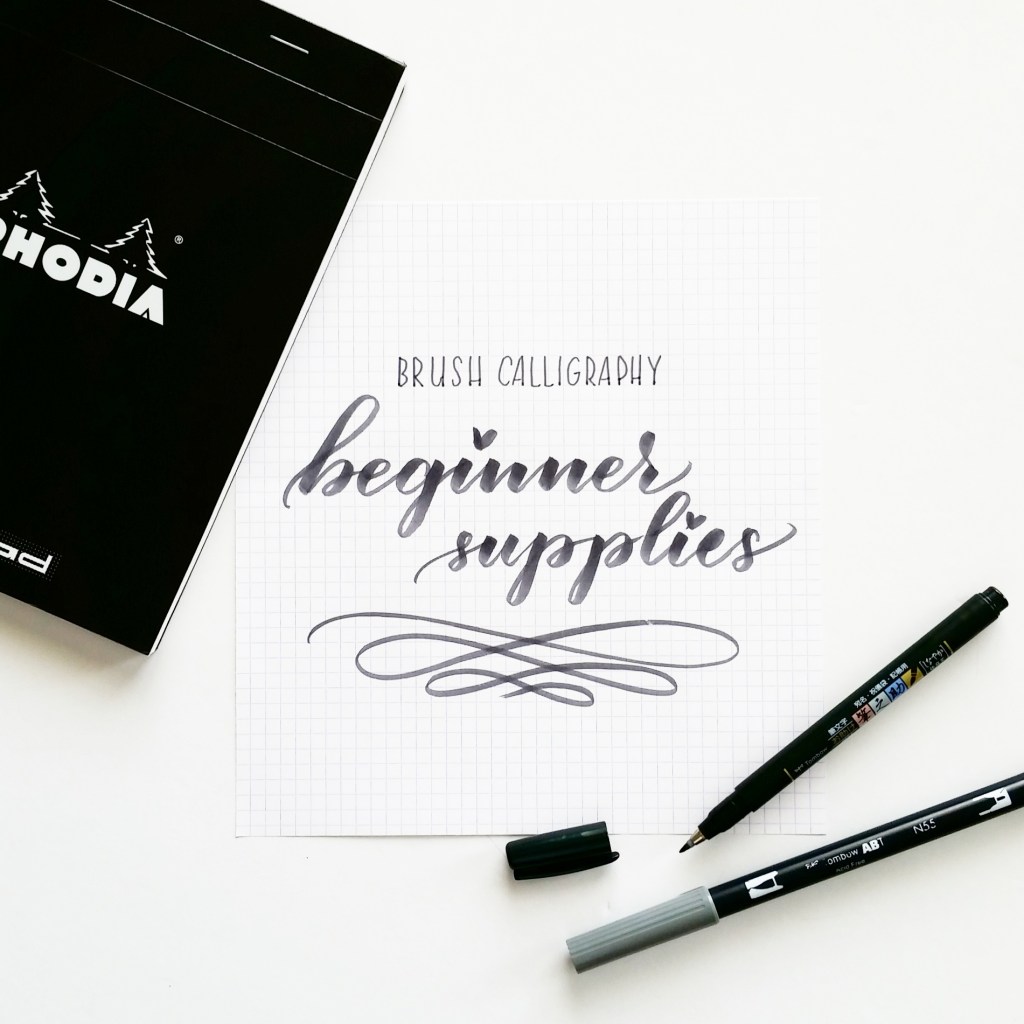
The number one question I am asked about brush calligraphy is: What supplies does a beginner need to get started?
My answer: All you need to get started with brush calligraph is a brush pen and some paper.
Really! That’s it.
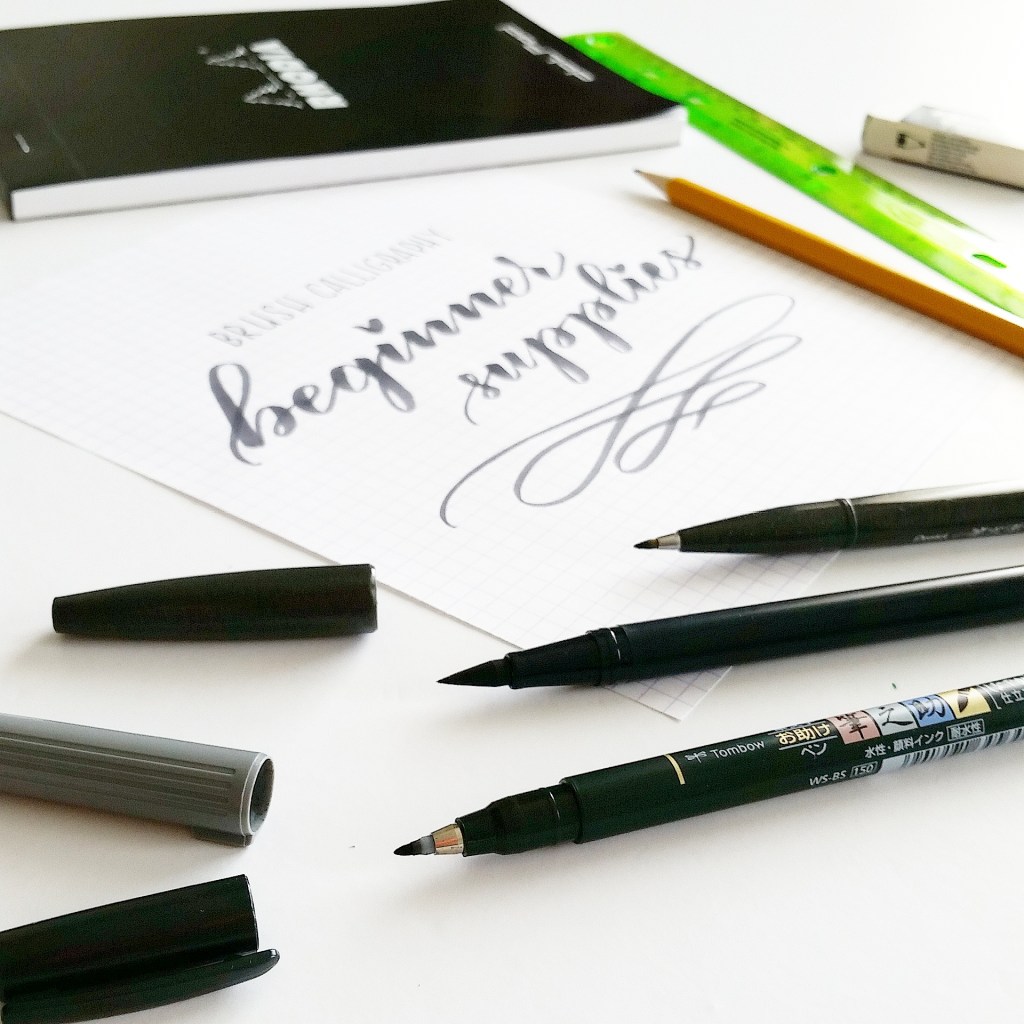
Yes, you can get more fancy and throw in some other supplies, such as rulers, pencils, and erasers (still relatively simple). But what makes brush calligraphy the easiest way to learn calligraphy is the fact that the tools you need to get started are so easy.
In this post, I will explain the supplies I first used as a beginner (most of which I continue to use!). This post is not an exhaustive post for beginners as there are plenty of supplies I have yet to try.
We’ll talk specifically about supplies in this post. For tutorials and videos on how to use the supplies and how to write calligraphy, check out my new page called, “Learn Brush Calligraphy.”
Brush Pens
To create brush calligraphy, you’ll need a brush pen. A brush pen is simply a marker that has a flexible tip, which allows you to exert varying amounts of pressure to create varying strokes with varying widths.
A great brush pen for beginners is the Tombow Dual Brush Pens
Another great beginner brush pen is the Pentel Fude Touch Sign pen. This pen tip is a lot smaller than the Tombow dual brush pen, which makes it a little more easier to practice with.
You can read more about my favorite brush pens in this post.
Paper
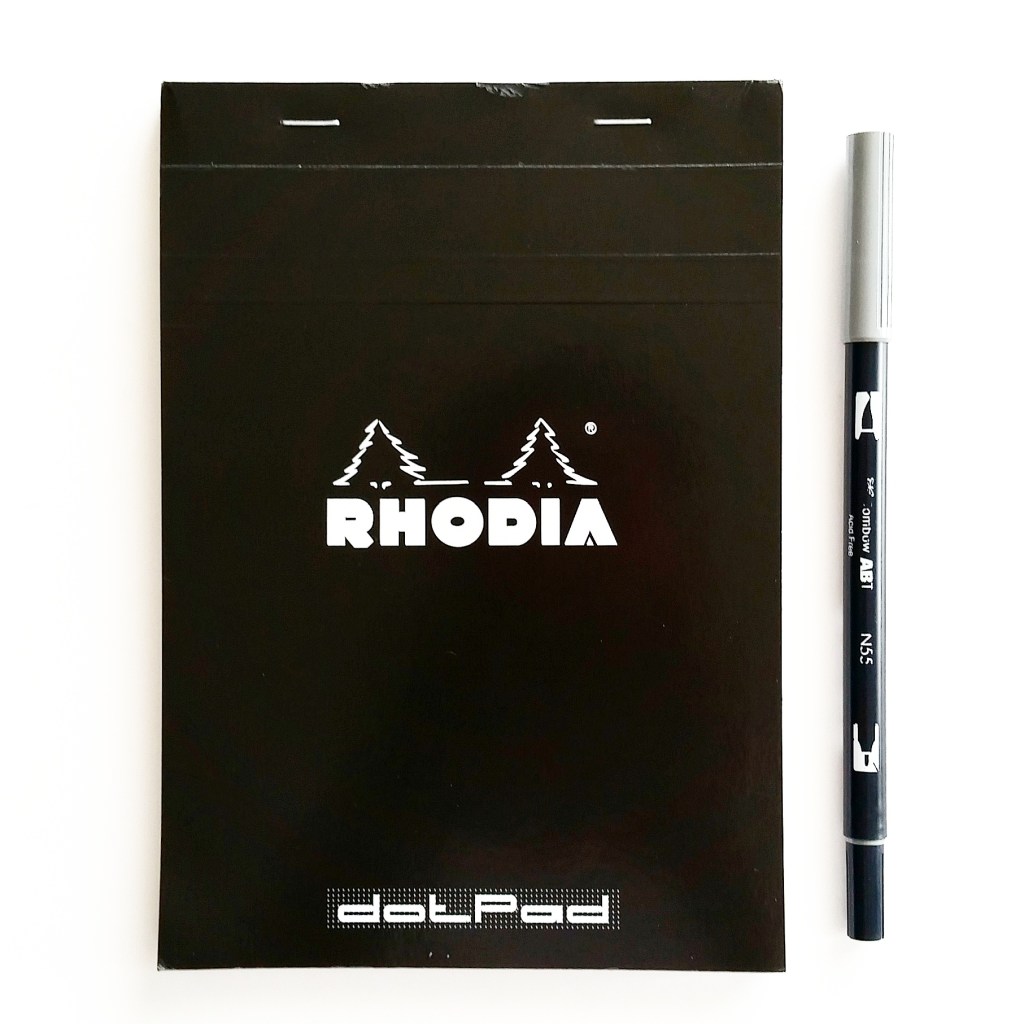
What is the best paper to get? Ideally, you want to get smooth, lined paper. My favorite type of paper comes in the form of Rhodia notepads. The two types I alway use are the Rhodia Dot Pad and the Rhodia grid pad.
Other types of paper that are easier to obtain are regular laser printer paper and legal pads. The great thing about brush pens are their durability. They do not require a specific type of paper. However, it is best to avoid paper with texture or rough surfaces, as they will cause your pen to fray faster.
Other supplies
Like I mentioned above, there are other supplies that are not necessary, but can be helpful for brush calligraphy. These include: a ruler, pencil, eraser, and lightpad. These supplies mainly help me with better formatting, alignment, and structuring of my calligraphy. I will elaborate in a future post the way I use these supplies.
Those are my best recommendations for beginners learning brush calligraphy! Remember, this post was designed to focus on the supplies themselves. If you’re interested in tutorials, tips, and videos on how to hold and use the brush pen, and how to write in calligraphy, visit my new “Learn Brush Calligraphy” page.
~ ~ ~
It’s your turn! Tell me in a comment below:
Are you a brush calligraphy beginner? What is one thing that interests you about brush calligraphy that you’d like to learn more about?
Do you already use any of the supplies I mention above? Tell me about your experiences with them!
~ ~ ~
P.S. If you liked this post, please share it with a friend!
P. P. S. If you haven’t already done so, subscribe to my blog below so you get my posts directly in your inbox!


Leave a Comment