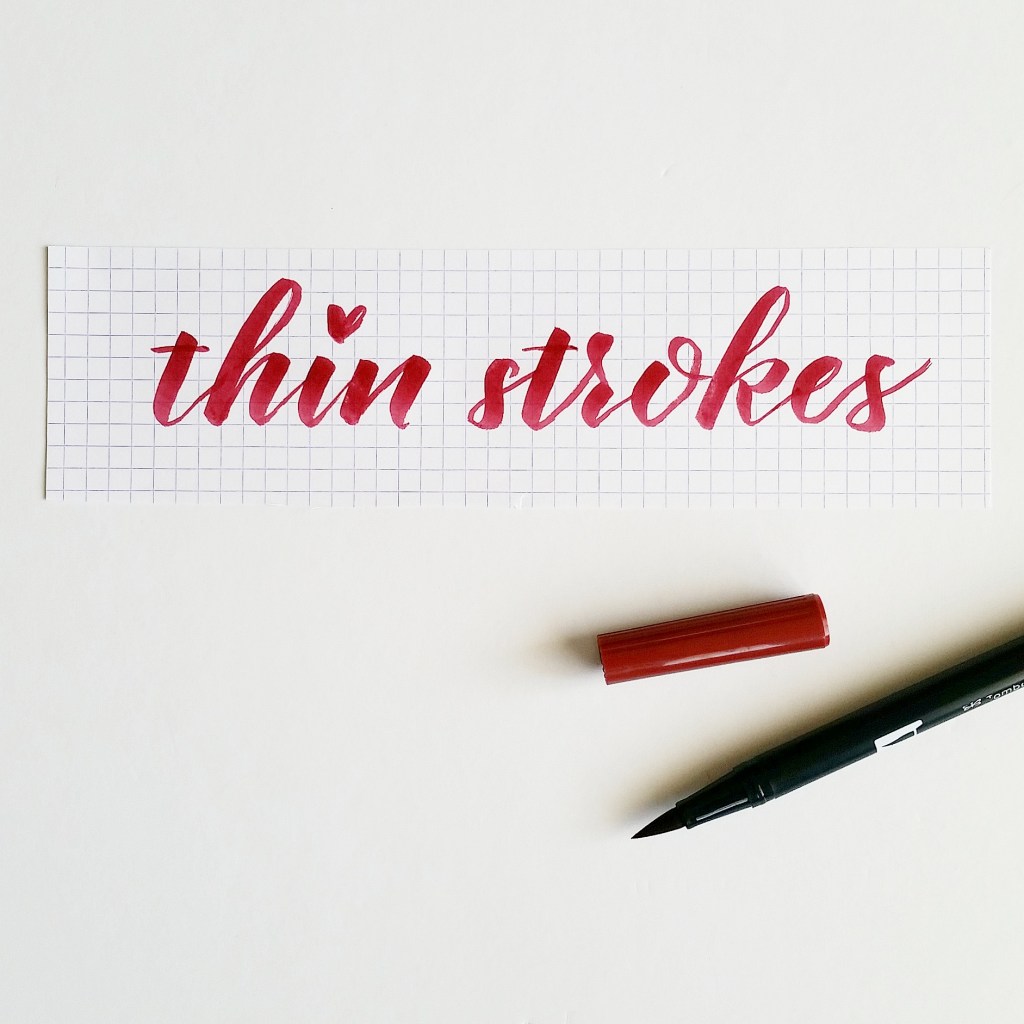
Calligraphy is defined by its distinct thick and thin strokes. It can be a challenge achieving the proper variation in stroke thickness, especially when first learning any form of calligraphy and getting used to the required tools, hand and body positioning, and technique.
When first learning brush calligraphy, you want to establish a solid foundation that is rooted in good habits and strong building blocks. One of those building blocks is thin strokes: Gaining control over your pen and training your muscles to consistently create thin strokes as your write.
In this post, I will share three steps to improving your thin brush calligraphy strokes. Stay tuned for my video tutorial at the end that goes over everything you see here!
Try a different brush pen
Not all pens were created. Some are bigger than others, some have more flexible tips than others, and some are more stiff than others.
- Size: Obviously, the bigger a pen tip is, the bigger the strokes will be. I noticed this is the case with the Tombow dual brush pens – the brush tip is very big, so naturally it is very difficult to create a hairline-sized upstroke.
- Flexibility: The more flexible a pen tip is, the more challenging it is to control the pen and achieve very thin strokes. It is possible to do so, but you must maintain a steady hand and be sure to use the same pressure consistently throughout the stroke.
- Stiffness: The more stiff a pen tip, the easier it is to create a thin stroke. This is because you can get away with less control over the pen and still achieve the thin stroke. The pen tip is strong enough to maintain a thin line.
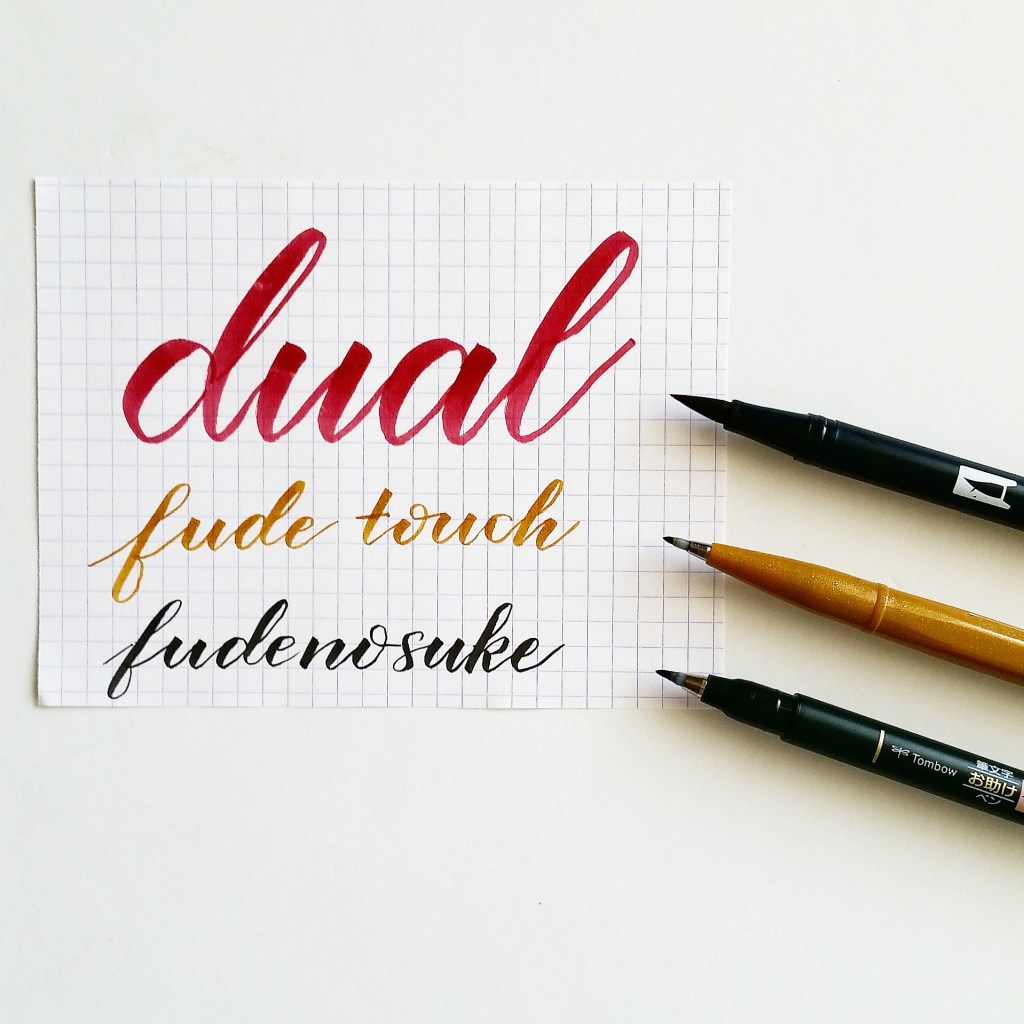
I recently compared my favorite brush pens in this post. Take a look!
Hold your pen at an angle
It is crucial to hold your pen at the proper angle. The less angled your pen, the harder it is to transition from thin to thick strokes and back again.
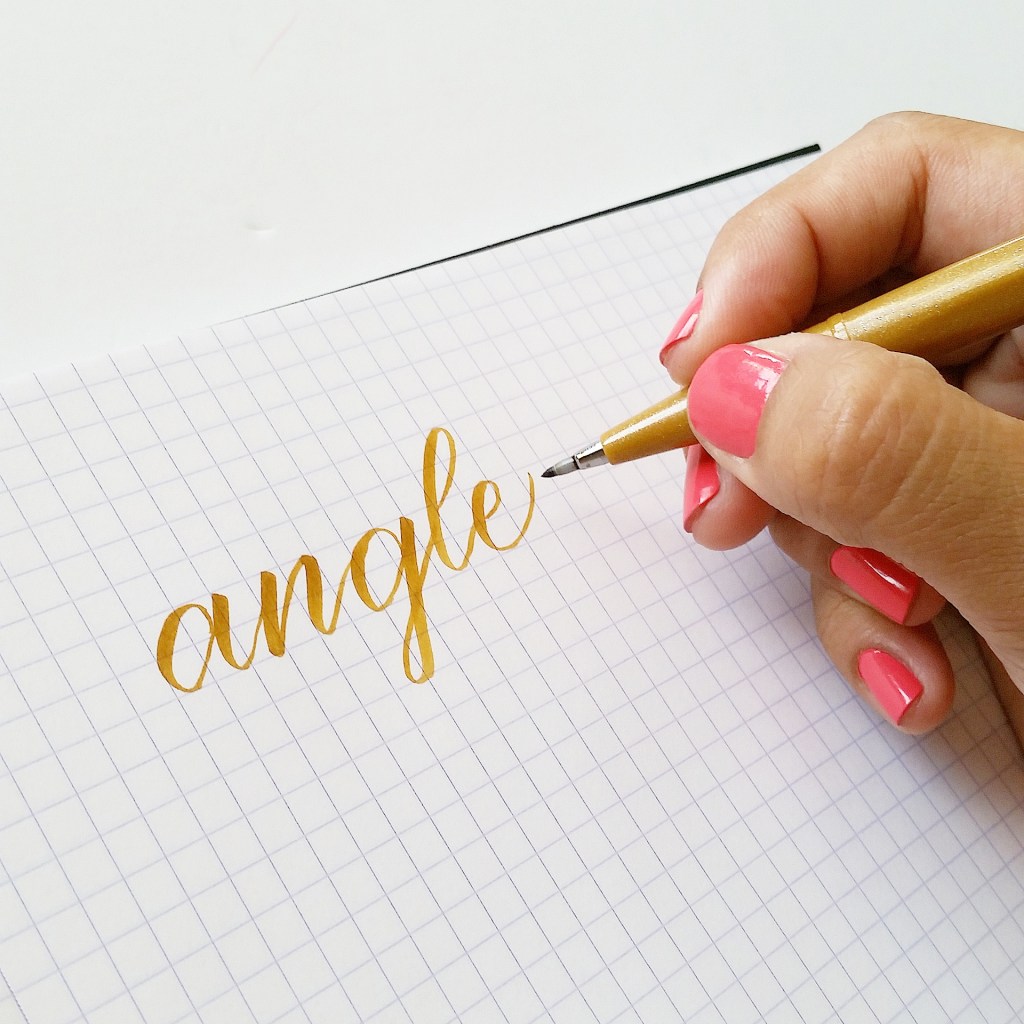
Try different angles to find the sweet spot for your pen. Since every brush pen is different in size, flexibility, and stiffness, the angle at which you hold each pen will not always be the same.
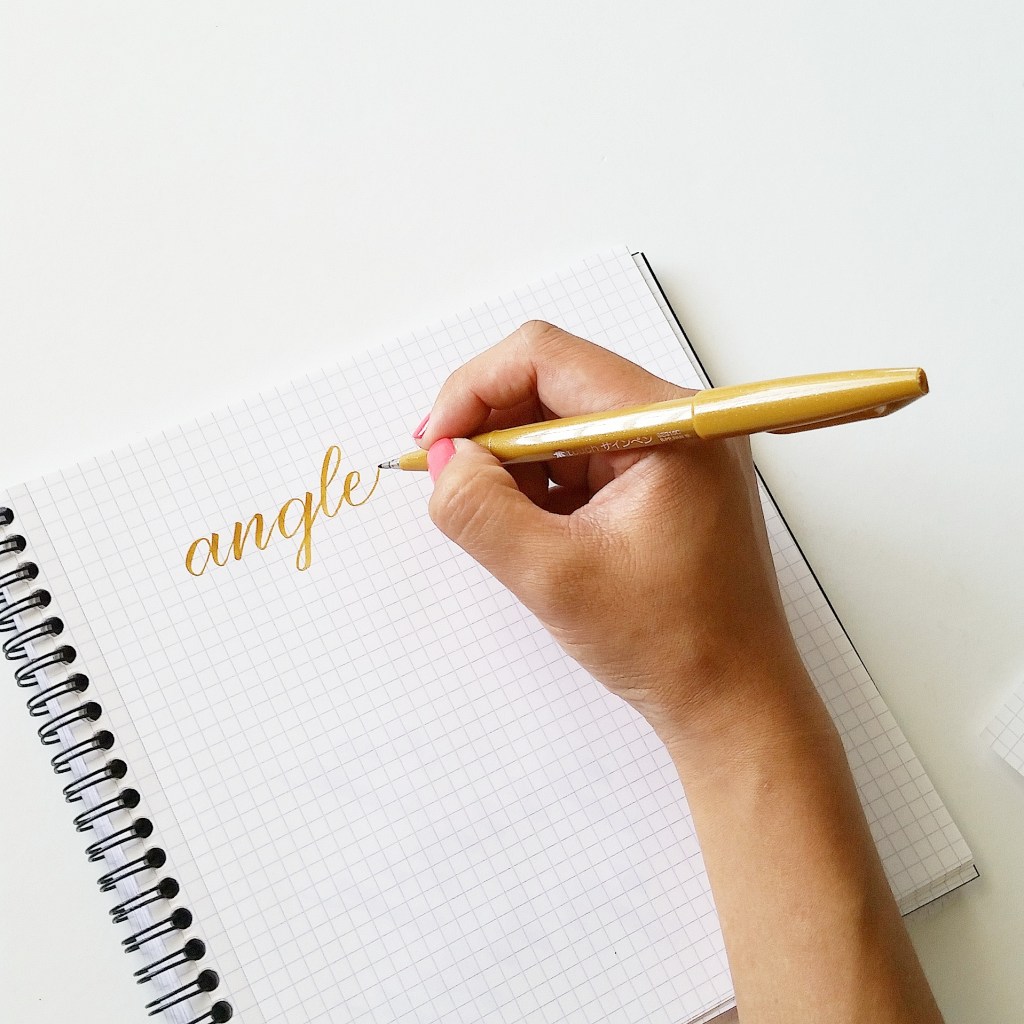
For more on finding the right grip, see my post on how to hold the brush pen. Be sure your grip is comfortable and that you position your body facing forward, straight ahead toward your writing surface. Then try to maintain your grip on the pen so that as you write, the angle of the pen does not change very much.
Break down each stroke
Breaking a task down into smaller, bite-sized pieces helps increases your ability to focus. When you try to take on too much too soon, you divide your attention and are able to focus less on each area you are trying to improve.
If you want to improve your thin strokes, then you must simply focus on the thin strokes. Don’t practice writing out long sentences, words, or even individual letters! Just focus on the thin strokes, and nothing else.
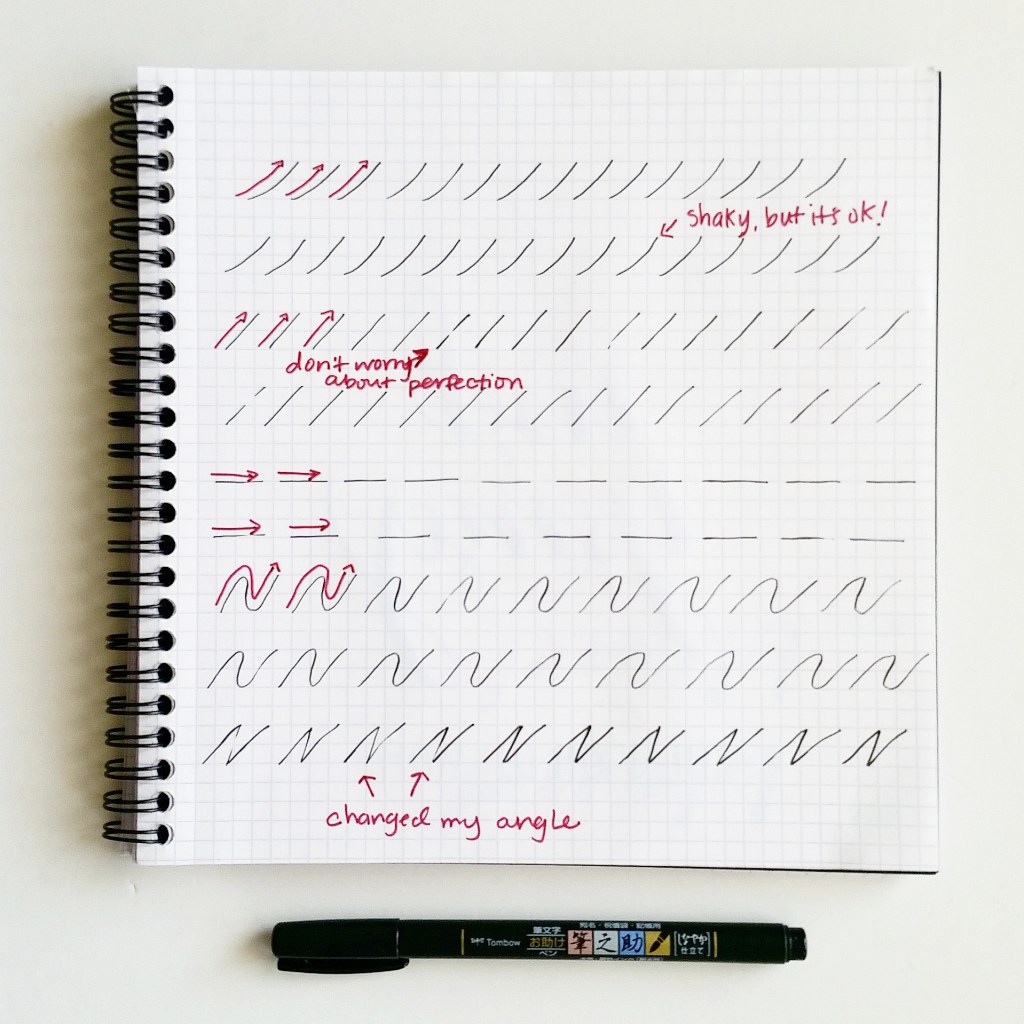
Fill a page, an ENTIRE page, with thin strokes. Pick a simple stroke, such as the entrance stroke to a letter, and slowly (I repeat: SLOWLY!) write the same stroke over and over until you reach the end of your page.
Video: Making your brush calligraphy strokes thinner
Watch this video to see the steps above in action!
~ ~ ~
It’s your turn!
Have you tried any of the steps above? Which one worked for you?
Do you have another tip to share on making thin strokes thinner? Let me know!
~ ~ ~
P.S. If you liked this post, I’d love if you would share it!
P. P. S. Be sure you are subscribed to my blog below so you don’t miss a post!


Leave a Comment